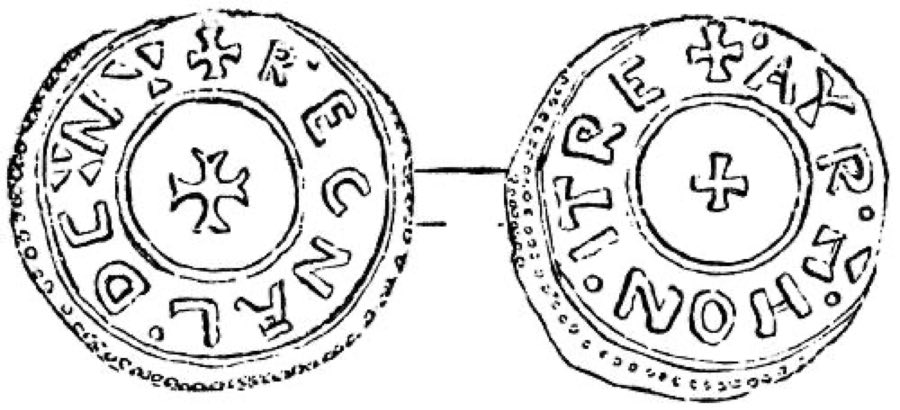

Coin · Medieval
Hammered silver penny
760–1660 CE, Anglo-Saxon, Viking
The hammered silver penny is the standard coin of England from Offa of Mercia around 760 to the introduction of milled coinage in the 1660s, struck by hand between dies. Anglo-Saxon and Viking issues name king, moneyer and mint; medieval issues follow the short cross, long cross and Edwardian series. It is the backbone of British numismatics and metal-detected finds.
| Object | Coin |
|---|---|
| Dates | 760–1660 CE |
| Period | Medieval |
| Cultures | Anglo-Saxon, Viking |
| Regions | Europe — Northern & British Isles |
Diagnostic traits
Thin struck silver coin with the ruler's bust or name on the obverse and a cross with moneyer and mint on the reverse.
Identification
The thin silver flan, ruler's bust or name and reverse cross with moneyer and mint distinguish it from sceattas, which are small and thick, and from continental deniers; Viking issues from York and East Anglia bear distinctive types. Cut halfpennies and farthings are common. Later pennies bear reign and mint marks.
Reproductions and fakes
Struck from modern dies and cast copies exist, some very deceptive; die comparison, weight and surface are the checks. Genuine finds usually show slight wear and toning.
Cite this article
Stratum Strata. "Hammered silver penny" (Artifact type). Stratum Strata pack 2026.09, as of 2026-09-21. https://stratum.black/strata/types/hammered-silver-penny. Accessed 2026-09-21.
@misc{stratum-hammered-silver-penny,
  title        = {Hammered silver penny},
  author       = {{Stratum Strata}},
  howpublished = {\url{https://stratum.black/strata/types/hammered-silver-penny}},
  year         = {2026},
  note         = {Artifact type article, Stratum Strata pack 2026.09, as of 2026-09-21; sources: stratum, commons. Accessed 2026-09-21.}
}
Citations carry the pack version and the article's as-of date so they resolve to the same text later. The facts themselves belong to the sources listed below; cite those for the science.