
Dinosaur
Triceratops
Three-horned face
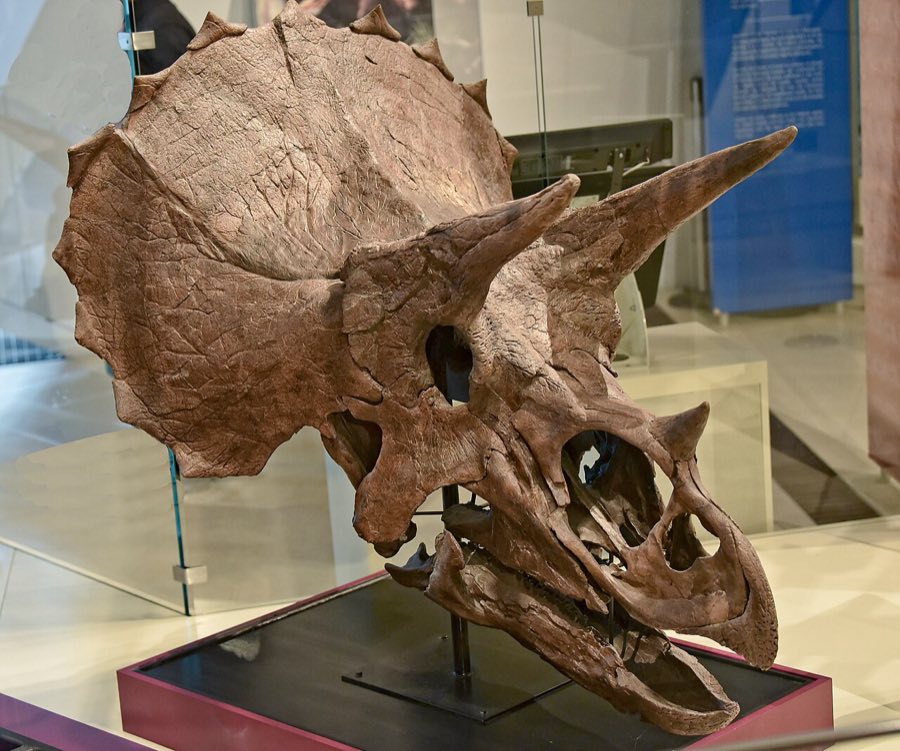
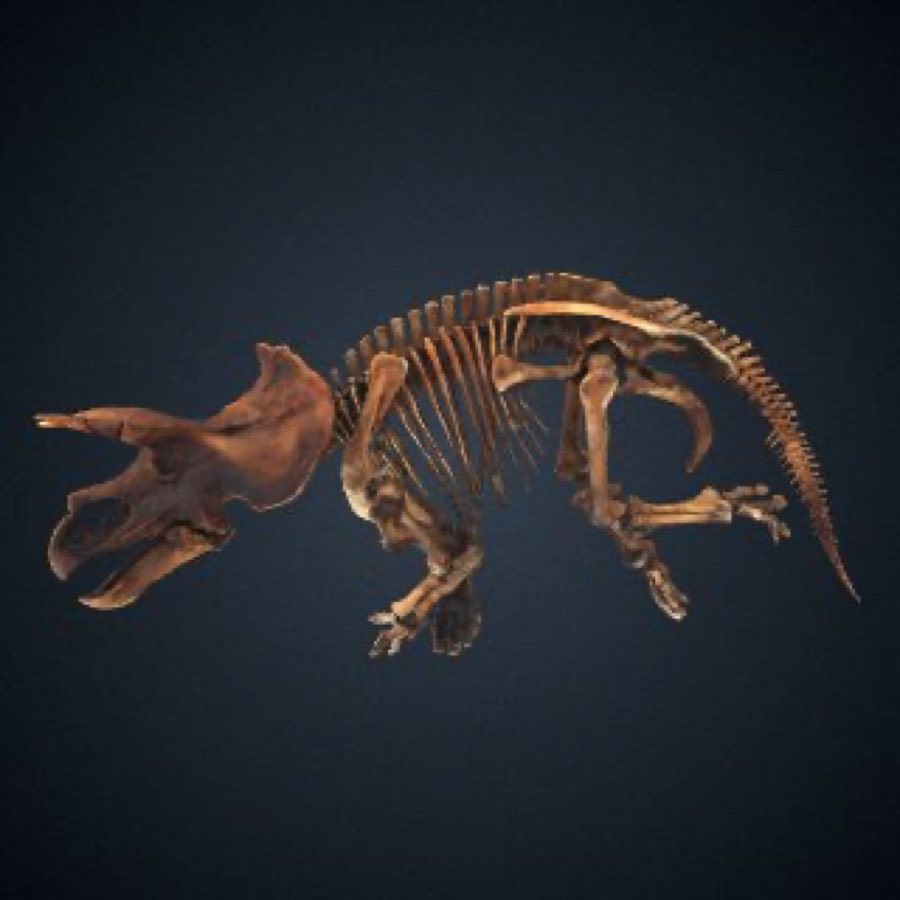
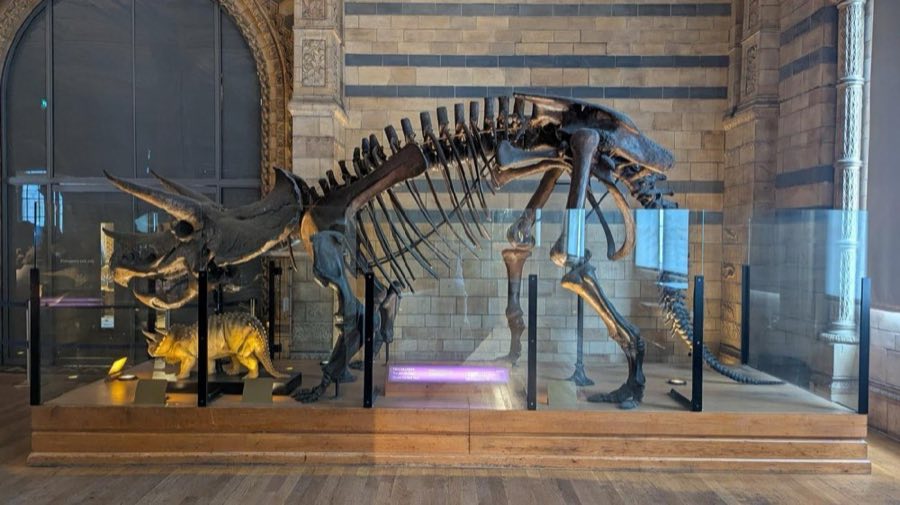
Triceratops is the three-horned ceratopsian of the latest Cretaceous Hell Creek and Lance formations and the most common large dinosaur in those beds. Collectors hold shed teeth (double-rooted, with a worn vertical shearing face), frill and horn fragments, vertebrae and the occasional brow horn; complete skulls sell for six and seven figures. Two species are recognised, T. horridus lower in the section and T. prorsus higher.
| Phylum | Chordata |
|---|---|
| Class | Reptilia |
| Order | Ornithischia |
| Family | Ceratopsidae |
| Group | Dinosaur |
| Size | 8–9 m long; skull to 2.5 m |
| Rank (PBDB) | genus· Paleobiology Database |
| Author | Marsh 1889· Paleobiology Database |
| Classification (PBDB) | Chordata › Ornithischia › NO_ORDER_SPECIFIED › Ceratopsidae· Paleobiology Database |
| Range (PBDB) | 83.6–66 Ma· Paleobiology Database |
| PBDB occurrences | 166· Paleobiology Database |
Restoration and fakes
Horn cores and frills are almost always crack-filled and consolidated; ask for a restoration percentage and photographs before prep. 'Triceratops teeth' with intact roots are scarce because the roots are resorbed; most are worn spitters.
Photographs
Elsewhere
- GBIF: 4823146
- PBDB: 38862
- Wikidata: Q14384
- PBDB taxon page
- Wikipedia: Triceratops
- PBDB search: Triceratops
Cite this article
Stratum Strata. "Triceratops" (Taxon). Stratum Strata pack 2026.09, as of 2026-09-21. https://stratum.black/strata/taxa/triceratops. Accessed 2026-09-21.
@misc{stratum-triceratops,
  title        = {Triceratops},
  author       = {{Stratum Strata}},
  howpublished = {\url{https://stratum.black/strata/taxa/triceratops}},
  year         = {2026},
  note         = {Taxon article, Stratum Strata pack 2026.09, as of 2026-09-21; sources: stratum, pbdb, commons, wikidata, smithsonian, nhm. Accessed 2026-09-21.}
}
Citations carry the pack version and the article's as-of date so they resolve to the same text later. The facts themselves belong to the sources listed below; cite those for the science.