
Site · United States
Poverty Point
Poverty Point, 1700–1100 BCE
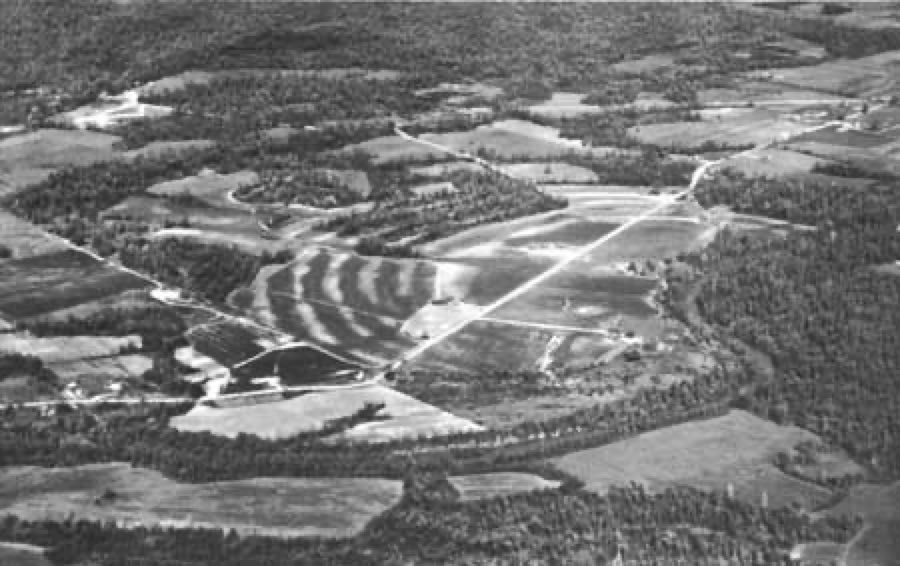
Poverty Point is a Late Archaic earthwork of six concentric C-shaped ridges facing a bayou, with a great bird-shaped mound and several others, built by hunter-gatherers around 1500 BCE. It is the largest earthwork of its age in North America and a hub of long-distance exchange.
| Country | United States |
|---|---|
| State / province | Louisiana |
| Dates | 1700–1100 BCE |
| Status | State Historic Site, National Monument and UNESCO World Heritage Site |
| Managed by | Louisiana Office of State Parks |
| Access | Open to the public with a museum, tram tour and trails |
| Coordinates | 32.637, -91.408 (public site) |
What was found
Surface collection and excavation yielded hundreds of thousands of baked-clay cooking balls, hematite and magnetite plummets, jasper beads and owl effigies, microlith tools, Motley and Gary points and exotic stone from across the mid-continent. Pottery is nearly absent.
Rules
Nothing may be collected, dug, moved or removed at Poverty Point; it is a protected archaeological site managed by Louisiana Office of State Parks, and taking artifacts, stones or samples is an offence. Federal, state and tribal law, including ARPA and NAGPRA where applicable, protect the site and its burials. The site is a World Heritage property. This article is for study and context only and is not a collecting locality.
Elsewhere
Cite this article
Stratum Strata. "Poverty Point" (Site). Stratum Strata pack 2026.09, as of 2026-09-21. https://stratum.black/strata/sites/poverty-point. Accessed 2026-09-21.
@misc{stratum-poverty-point,
  title        = {Poverty Point},
  author       = {{Stratum Strata}},
  howpublished = {\url{https://stratum.black/strata/sites/poverty-point}},
  year         = {2026},
  note         = {Site article, Stratum Strata pack 2026.09, as of 2026-09-21; sources: stratum, wikidata, commons. Accessed 2026-09-21.}
}
Citations carry the pack version and the article's as-of date so they resolve to the same text later. The facts themselves belong to the sources listed below; cite those for the science.