
Site · Iran
Persepolis
518–330 BCE
Persepolis is the ceremonial capital of the Achaemenid empire founded by Darius I around 518 BCE on a terrace below the Kuh-e Rahmat, with the Apadana, Hall of a Hundred Columns and royal tombs, burnt by Alexander in 330 BCE. The reliefs are the best-preserved record of the peoples of the Persian empire.
| Country | Iran |
|---|---|
| State / province | Fars |
| Dates | 518–330 BCE |
| Status | Archaeological site and UNESCO World Heritage Site |
| Managed by | Iranian Ministry of Cultural Heritage, Tourism and Handicrafts |
| Access | Open to the public with a site museum |
| Coordinates | 29.935, 52.891 (public site) |
What was found
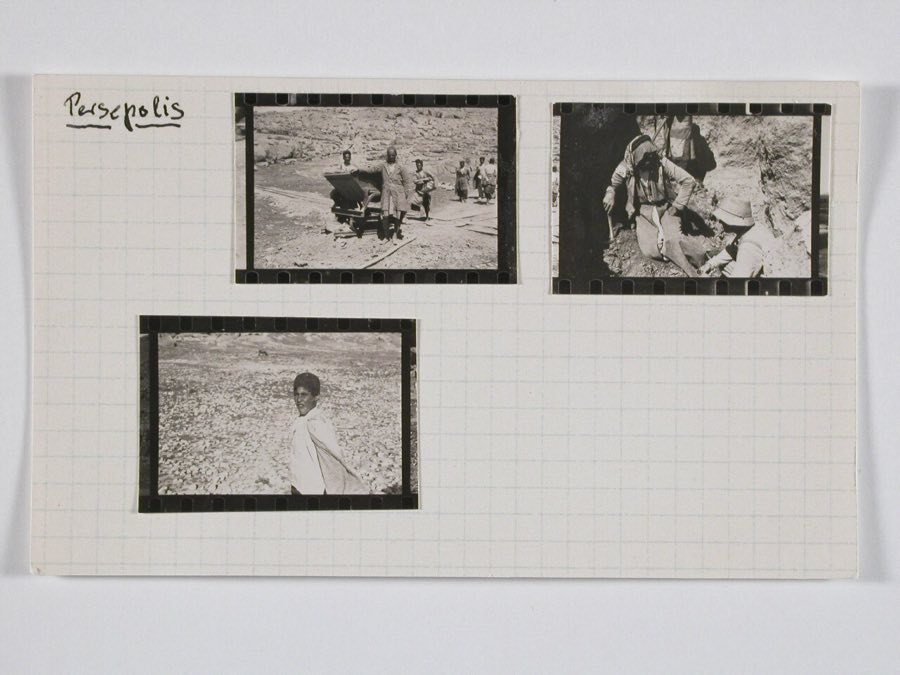
The Oriental Institute excavations recovered the Apadana reliefs of tribute bearers, the Persepolis Fortification and Treasury tablets in Elamite, gold and silver foundation plaques, stone vessels and the burnt debris of Alexander's destruction. The Fortification tablets are being returned to Iran from the University of Chicago.
Rules
Nothing may be collected, dug, moved or removed at Persepolis; it is a protected archaeological site managed by Iranian Ministry of Cultural Heritage, Tourism and Handicrafts, and taking artifacts, stones or samples is an offence. Iranian law vests all antiquities in the state, and removal or export is a crime. This article is for study and context only and is not a collecting locality.
Cite this article
Stratum Strata. "Persepolis" (Site). Stratum Strata pack 2026.09, as of 2026-09-21. https://stratum.black/strata/sites/persepolis. Accessed 2026-09-21.
@misc{stratum-persepolis,
  title        = {Persepolis},
  author       = {{Stratum Strata}},
  howpublished = {\url{https://stratum.black/strata/sites/persepolis}},
  year         = {2026},
  note         = {Site article, Stratum Strata pack 2026.09, as of 2026-09-21; sources: stratum, commons. Accessed 2026-09-21.}
}
Citations carry the pack version and the article's as-of date so they resolve to the same text later. The facts themselves belong to the sources listed below; cite those for the science.