
Site · United Kingdom
Hadrian's Wall
Roman, 122–410 CE
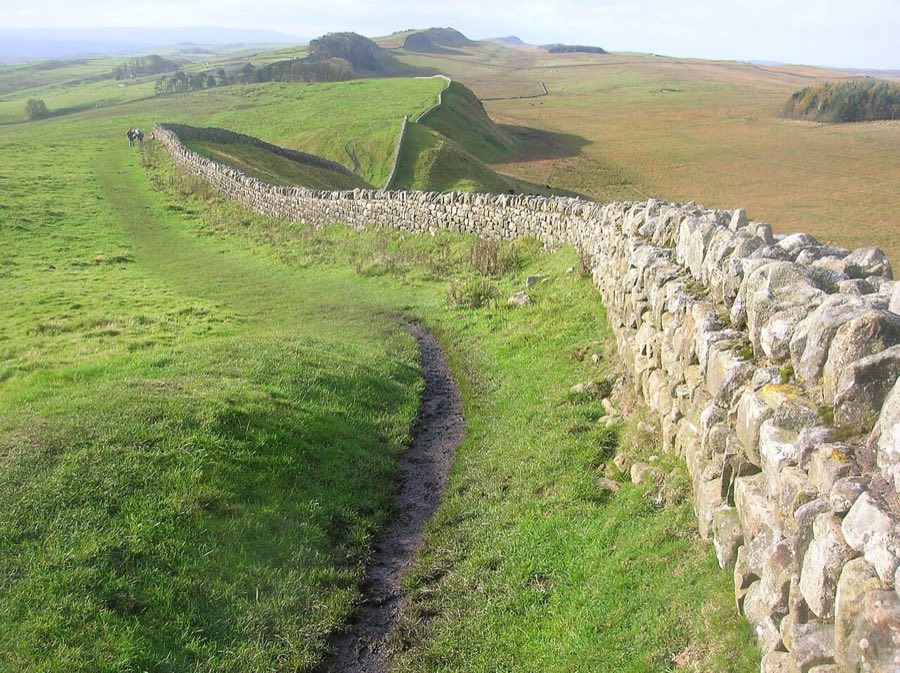
Hadrian's Wall runs 73 miles from Wallsend to Bowness-on-Solway, built from 122 CE as the northern frontier of the Roman empire with forts, milecastles and turrets, and garrisoned until the early fifth century. It is the best-preserved frontier of the Roman empire and a World Heritage site.
| Country | United Kingdom |
|---|---|
| State / province | Northumberland and Cumbria |
| Dates | 122–410 CE |
| Status | Scheduled Monument and UNESCO World Heritage Site |
| Managed by | English Heritage, National Trust and other partners |
| Access | The Wall path is public; forts such as Housesteads and Birdoswald are ticketed |
| Coordinates | 55.013, -2.331 (public site) |
What was found
Forts, milecastles and vici along the Wall have produced altars and inscriptions, coins, brooches, samian, glass, weapons and the Carrawburgh Mithraeum. Housesteads has the best-preserved latrines in Roman Britain.
Rules
Nothing may be collected, dug, moved or removed at Hadrian's Wall; it is a protected archaeological site managed by English Heritage, National Trust and other partners, and taking artifacts, stones or samples is an offence. In England, Scheduled Monument protection makes any digging or metal detecting without consent an offence. Metal detecting anywhere on the Wall corridor is illegal. This article is for study and context only and is not a collecting locality.
Elsewhere
Cite this article
Stratum Strata. "Hadrian's Wall" (Site). Stratum Strata pack 2026.09, as of 2026-09-21. https://stratum.black/strata/sites/hadrian-s-wall. Accessed 2026-09-21.
@misc{stratum-hadrian-s-wall,
  title        = {Hadrian's Wall},
  author       = {{Stratum Strata}},
  howpublished = {\url{https://stratum.black/strata/sites/hadrian-s-wall}},
  year         = {2026},
  note         = {Site article, Stratum Strata pack 2026.09, as of 2026-09-21; sources: stratum, wikidata, commons. Accessed 2026-09-21.}
}
Citations carry the pack version and the article's as-of date so they resolve to the same text later. The facts themselves belong to the sources listed below; cite those for the science.