
Site · United Kingdom
Fishbourne Roman Palace
Roman, 43–280 CE
Fishbourne is the largest Roman residence known north of the Alps, built about 75 CE and probably for the client king Togidubnus, on the site of a Claudian military supply base. The mosaics are the earliest in Britain and the garden the first Roman garden to be excavated. It burned around 270–280 and was abandoned.
| Country | United Kingdom |
|---|---|
| Dates | 43–280 CE |
| Status | Scheduled Monument and museum |
| Managed by | Sussex Archaeological Society |
| Access | Open daily from February to December with a museum over the north wing mosaics, a replanted Roman garden and a collections discovery centre. |
| Coordinates | 50.837, -0.811 (public site) |
What was found
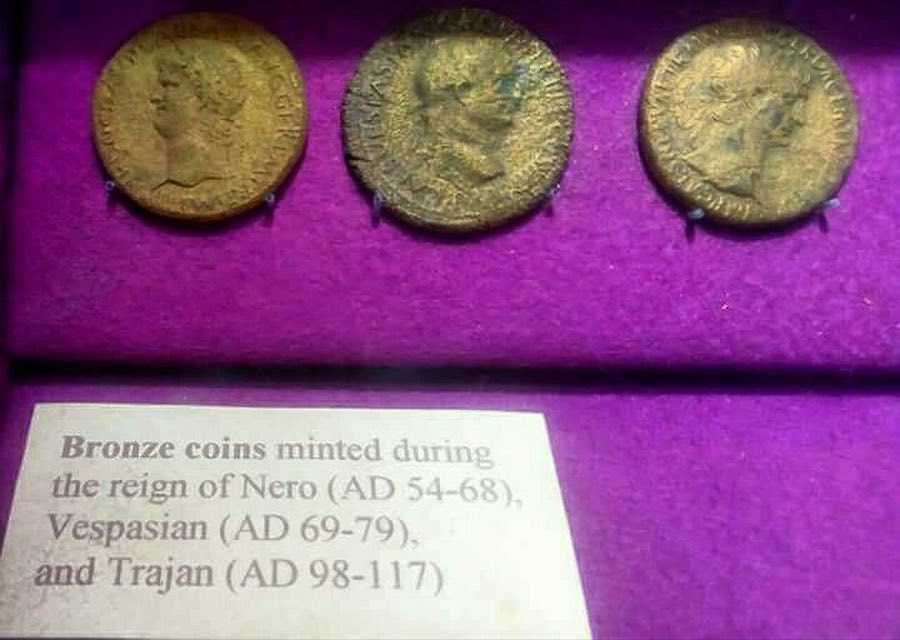
Barry Cunliffe's excavations of 1961–69, begun after a water main cut through a mosaic, uncovered a Flavian palace of four wings around a formal garden, with more than twenty mosaic floors including the Cupid on a Dolphin, painted plaster, marble veneer, Samian ware and a large coin series ending with the fire of about 270.
Rules
Nothing may be collected; the site is a Scheduled Monument under the Ancient Monuments and Archaeological Areas Act 1979, and metal detecting is prohibited, while finds elsewhere in England fall under the Treasure Act 1996 and the Portable Antiquities Scheme. This article is for study and context only and is not a collecting locality.
Elsewhere
Cite this article
Stratum Strata. "Fishbourne Roman Palace" (Site). Stratum Strata pack 2026.09, as of 2026-09-21. https://stratum.black/strata/sites/fishbourne-roman-palace. Accessed 2026-09-21.
@misc{stratum-fishbourne-roman-palace,
  title        = {Fishbourne Roman Palace},
  author       = {{Stratum Strata}},
  howpublished = {\url{https://stratum.black/strata/sites/fishbourne-roman-palace}},
  year         = {2026},
  note         = {Site article, Stratum Strata pack 2026.09, as of 2026-09-21; sources: stratum, commons. Accessed 2026-09-21.}
}
Citations carry the pack version and the article's as-of date so they resolve to the same text later. The facts themselves belong to the sources listed below; cite those for the science.