
Site · France
Bibracte
La Tène, Roman, 200–20 BCE
Bibracte on Mont Beuvray was the capital of the Aedui, where Caesar wintered in 52 BCE after Alesia and wrote part of the Gallic War; it was abandoned when the tribe moved to Augustodunum (Autun) around 20 BCE. Its 200 ha within a 5 km rampart make it one of the largest late Iron Age oppida and a model for the transition from Celtic to Roman urbanism.
| Country | France |
|---|---|
| Dates | 200–20 BCE |
| Status | Grand Site de France and European archaeological research centre with museum |
| Managed by | Bibracte EPCC (public cultural cooperation establishment) |
| Access | The museum at the foot of Mont Beuvray is open from March to November and the oppidum is freely walkable, with guided tours of the excavations in summer. |
| Coordinates | 46.924, 4.037 (public site) |
What was found
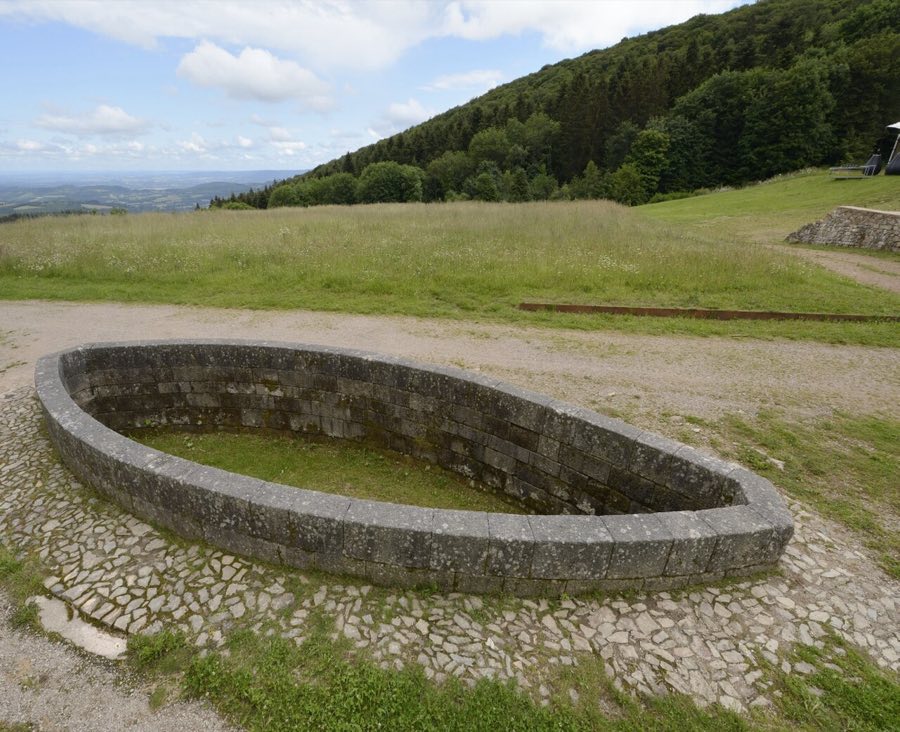
Excavations since 1984 by teams from across Europe have uncovered the rampart of murus gallicus type, artisans' quarters with ironworking and enamelling, Roman-style domus, a monumental basin, wine amphorae in vast quantities and Gaulish coins of the Aedui.
Rules
Nothing may be collected; the site is a classified Monument Historique under France's Code du patrimoine, which also bans metal detecting for archaeological purposes without authorisation. This article is for study and context only and is not a collecting locality.
Elsewhere
Cite this article
Stratum Strata. "Bibracte" (Site). Stratum Strata pack 2026.09, as of 2026-09-21. https://stratum.black/strata/sites/bibracte. Accessed 2026-09-21.
@misc{stratum-bibracte,
  title        = {Bibracte},
  author       = {{Stratum Strata}},
  howpublished = {\url{https://stratum.black/strata/sites/bibracte}},
  year         = {2026},
  note         = {Site article, Stratum Strata pack 2026.09, as of 2026-09-21; sources: stratum, commons. Accessed 2026-09-21.}
}
Citations carry the pack version and the article's as-of date so they resolve to the same text later. The facts themselves belong to the sources listed below; cite those for the science.