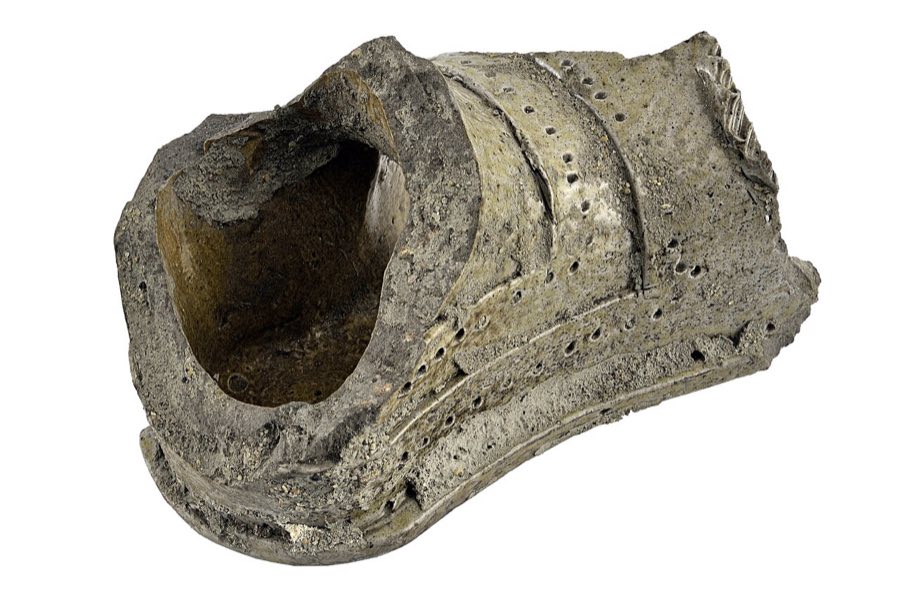

Material · ceramic
Stoneware
East Asia, Europe — Western & Central
Stoneware is high-fired, vitrified ceramic that is impervious without glaze, made in China from the Shang period and perfected in Song celadons, and in medieval Europe from the Rhineland. Longquan, Yaozhou, Jun and Cizhou are stoneware. It rings when struck.
| Kind | ceramic |
|---|---|
| Regions | East Asia, Europe — Western & Central |
Sources
Chinese stoneware clays are found in Zhejiang, Shaanxi, Henan and Jiangxi; European stoneware clays in the Rhineland (Siegburg, Raeren, Frechen) and Staffordshire. Kiln sites have been excavated at most of the major Chinese and Rhenish centres.
Identification
Stoneware is dense, hard, grey to brown in the body, non-porous and rings when tapped; glazes fuse with the body. Chinese stonewares show an unglazed foot rim that fires reddish. European stonewares are salt-glazed with an orange-peel texture.
Substitutes and fakes
Chinese stonewares are reproduced at the original kiln sites and are hard to date scientifically. Wear on the foot, glaze bubbles and provenance are the guides.
Cite this article
Stratum Strata. "Stoneware" (Material). Stratum Strata pack 2026.09, as of 2026-09-21. https://stratum.black/strata/materials/stoneware. Accessed 2026-09-21.
@misc{stratum-stoneware,
  title        = {Stoneware},
  author       = {{Stratum Strata}},
  howpublished = {\url{https://stratum.black/strata/materials/stoneware}},
  year         = {2026},
  note         = {Material article, Stratum Strata pack 2026.09, as of 2026-09-21; sources: stratum, commons. Accessed 2026-09-21.}
}
Citations carry the pack version and the article's as-of date so they resolve to the same text later. The facts themselves belong to the sources listed below; cite those for the science.