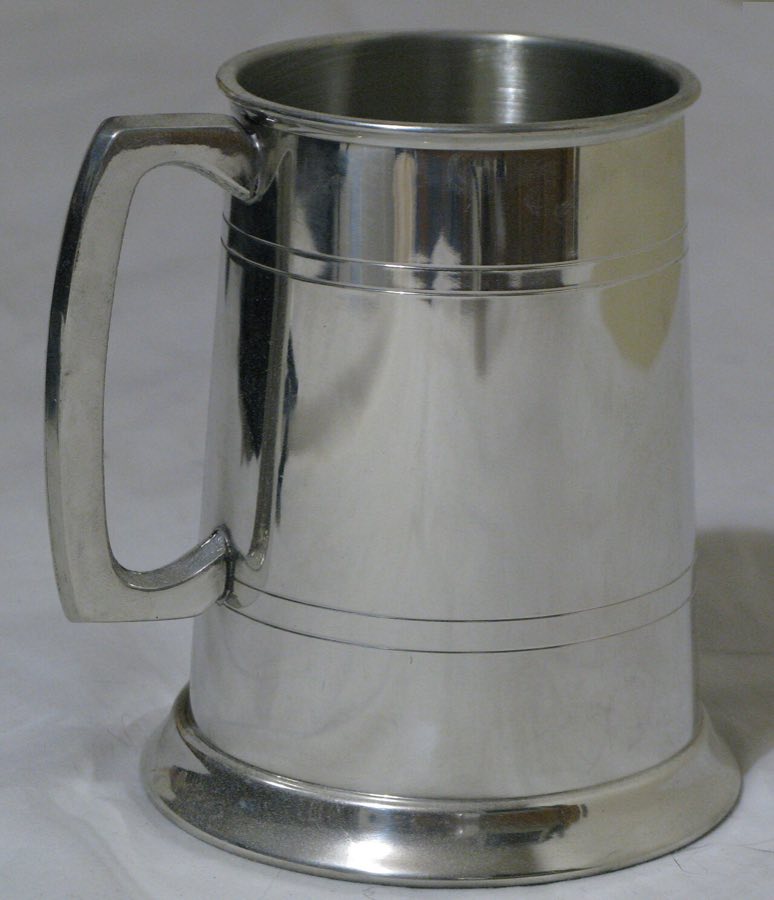

Material · metal
Pewter
Europe — Northern & British Isles, Europe — Western & Central
Pewter is a tin-lead alloy used for tableware in Roman Britain from the third century CE and in medieval and post-medieval Europe for plates, tankards, spoons and pilgrim badges. Romano-British pewter hoards from Somerset and the Fens are notable. Post-medieval pewter carries touch marks.
| Kind | metal |
|---|---|
| Regions | Europe — Northern & British Isles, Europe — Western & Central |
Sources
Tin came from Cornwall and Devon and lead from the Mendips and Derbyshire; pewter was made in London, Bristol and York and across the Low Countries and Germany. Romano-British pewter was cast in stone moulds found at Camerton and elsewhere in Somerset.
Identification
Pewter is grey, heavier than tin, and develops a dull grey or warty corroded surface when buried; post-medieval pewter carries maker's touch marks and quality stamps. Roman pewter is plainer and often lathe-finished. Tin content varies and shows in colour.
Substitutes and fakes
Post-medieval pewter is reproduced with false touch marks; Roman pewter is rarely faked. Corrosion on genuine buried pewter is hard and warty.
Elsewhere
- Wikidata: Q852372
- Wikipedia: pewter
Cite this article
Stratum Strata. "Pewter" (Material). Stratum Strata pack 2026.09, as of 2026-09-21. https://stratum.black/strata/materials/pewter. Accessed 2026-09-21.
@misc{stratum-pewter,
  title        = {Pewter},
  author       = {{Stratum Strata}},
  howpublished = {\url{https://stratum.black/strata/materials/pewter}},
  year         = {2026},
  note         = {Material article, Stratum Strata pack 2026.09, as of 2026-09-21; sources: stratum, wikidata, commons. Accessed 2026-09-21.}
}
Citations carry the pack version and the article's as-of date so they resolve to the same text later. The facts themselves belong to the sources listed below; cite those for the science.