
Culture · Late Prehistoric
Mogollon
200–1450 CE, North America — Southwest
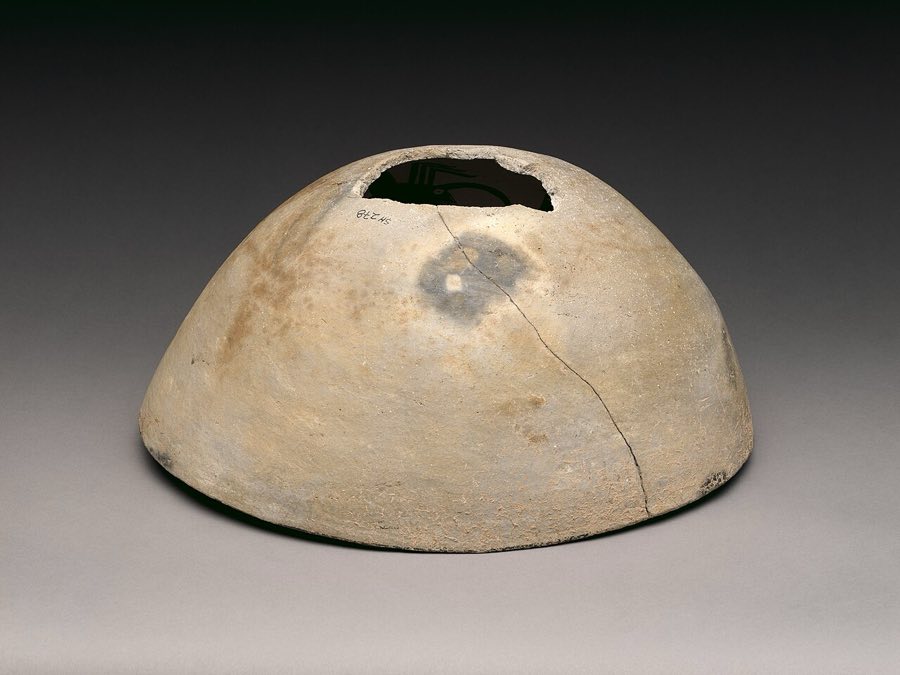
The Mogollon were the mountain and desert farmers of southern New Mexico, eastern Arizona and Chihuahua from about 200 to 1,450 CE, living first in pit houses and later in pueblos. The culture includes the Mimbres branch and, late, the Casas Grandes tradition around Paquimé. Collectors hold brown and red ware pottery, three-quarter-grooved axes, small arrowpoints and, from late sites, Ramos Polychrome jars.
| Dates | 200–1450 CE |
|---|---|
| Period | Late Prehistoric |
| Region | North America — Southwest |
| Areas | Southern New Mexico, Eastern Arizona, Chihuahua |
| Typical objects | Bowl, Jar, Projectile point, Grooved axe |
| Typical materials | Chert, Obsidian, Basalt |
Identification
Early Mogollon pottery is plain brown or red-slipped, coil-and-scrape made, with later black-on-white and Casas Grandes polychrome. Three-quarter-grooved axes, tubular pipes, stone bowls and small Cottonwood triangular points are common. The full Mogollon pattern is distinguished from Ancestral Puebloan by brown rather than grey paste.
Legality
In the United States, prehistoric artifacts may be collected and sold only when they come from private land with the landowner's permission; removal from federal, tribal or most state land is prohibited under ARPA and state statutes. Funerary objects, human remains and sacred items are covered by NAGPRA and are not legitimately traded, and Canadian provinces treat archaeological finds as Crown or provincial property. The Gila and Apache-Sitgreaves national forests cover much of the Mogollon heartland, and Paquimé material is Mexican federal property.
Reproductions and fakes
Casas Grandes polychrome is heavily reproduced in Mata Ortiz, Chihuahua, where a modern pottery revival began in the 1970s; these pots are legitimate art but are sometimes passed off as ancient. Modern pieces are thinner, more perfectly symmetrical and lack fire clouding and wear.
Cite this article
Stratum Strata. "Mogollon" (Culture). Stratum Strata pack 2026.09, as of 2026-09-21. https://stratum.black/strata/cultures/mogollon. Accessed 2026-09-21.
@misc{stratum-mogollon,
  title        = {Mogollon},
  author       = {{Stratum Strata}},
  howpublished = {\url{https://stratum.black/strata/cultures/mogollon}},
  year         = {2026},
  note         = {Culture article, Stratum Strata pack 2026.09, as of 2026-09-21; sources: stratum, commons. Accessed 2026-09-21.}
}
Citations carry the pack version and the article's as-of date so they resolve to the same text later. The facts themselves belong to the sources listed below; cite those for the science.